

endmatter: February
an end of the month collection

Hello, friends! Welcome to February’s endmatter.
The series’ inspiration lies at the end of a book, where the back matter (or end matter) exists. This overlooked place is, at the very least, where author acknowledgements and their bios are featured, but it is also often filled with a plethora of interesting information, delivered in appendices, glossaries, endnotes, indexes, bibliographies, and colophons. Any other geeks out there who read with their finger lodged in the endnotes?
Likewise, endmatter will function here as a month-end recap of the press’s endeavors, including announcements, updates, and most importantly, the month’s online publications. It will (when provided) feature recordings of published work in the author’s own voice, and, to emulate the goldmine of information of endnotes, it will also include some additional wisdom and insight from SFP’s published writers.
Hope you have all had a wonderful month!
* [Dear friends, I’m still playing around with how I want this to look visually, which is a challenge when trying to synthesize both desktop and mobile. So please bear with me over any design inconsistencies in these initial months of endmatter]
This Month’s Publications
What inspired the work?
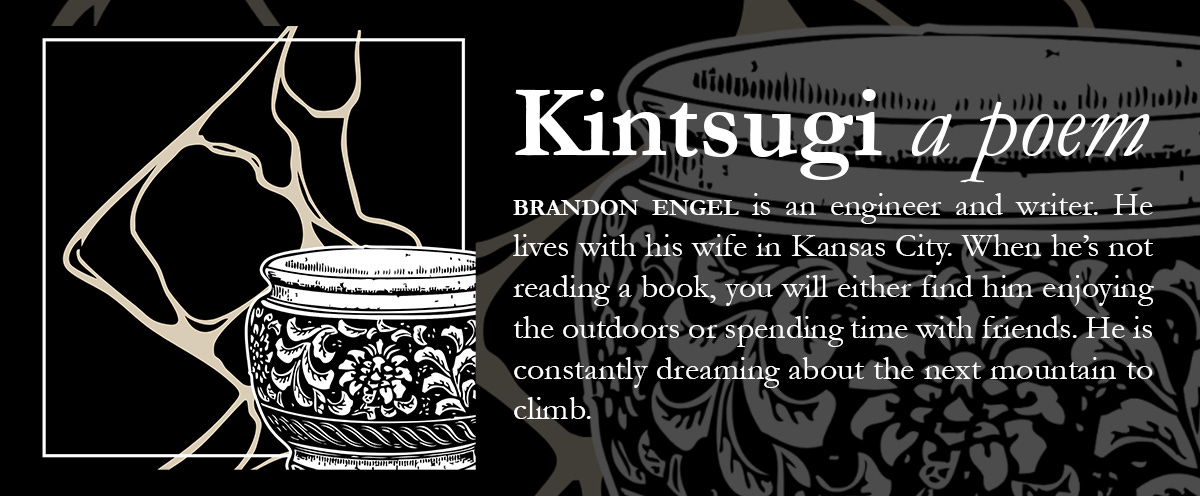
BRANDON: This poem was inspired by multiple Bible verses (Psalm 31:12, Isaiah 64:8, 2 Corinthians 4:7, Psalm 23:5, Romans 9:21) that blend metaphors of humanity as vessels at stages of the redemptive process as told through the eyes of the Kintsugi artform.
Find more of Brandon at Cultivate This Place
What inspired the work?
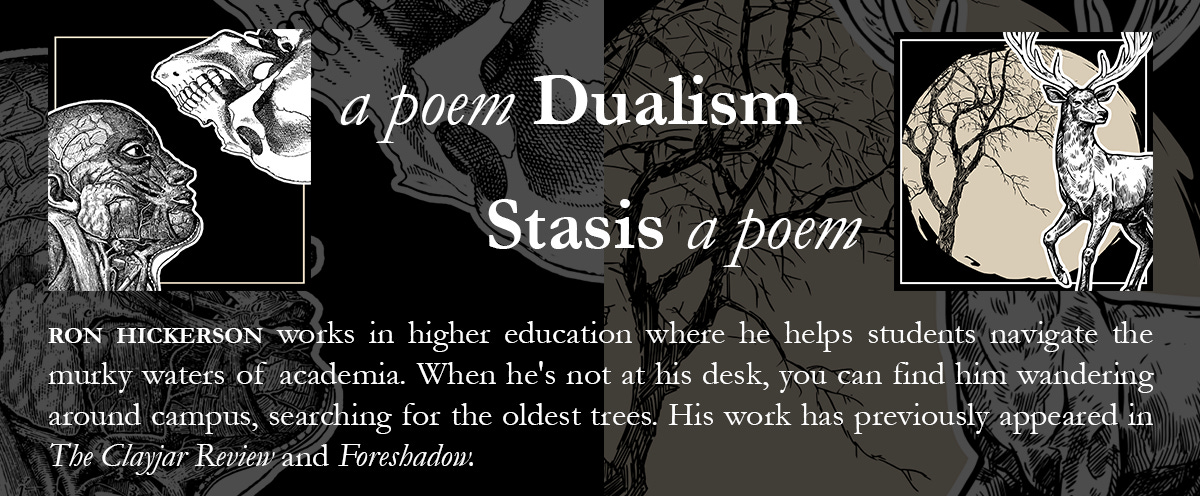
RON: Stasis | I was inspired to write Stasis during a stressful time at work when I was promoted to a new position which came with a lot of unexpected responsibilities and unforeseen conflict, which led to a lot of walks where I would reflect on my job and my anxieties amid the old oak trees.
Dualism | I wrote Dualism at a time that I was reading Surprised by Scripture by N.T. Wright, which led me to reflect on the misguided belief that the body is “bad” because it is fallen, and that the soul is “good” because Jesus saved it. Reflecting on this made me try to trace where I first learned this belief, bringing back childhood church memories—not all of them bad.
If this piece were a Bible verse, which would it be? Why?
RON: Stasis | Stasis would be closest to either Psalm 46:10, “Be still, and know that I am God” or Matthew 6:33, “But seek first the kingdom of God and his righteousness, and all these things will be added to you.” The poem is a reflection on the distractions of life – even the “good” distractions like success—and how chasing those distractions yield diminishing returns when compared to chasing after the God.
Dualism | Dualism would be closes to Romans 8:23, “... we ourselves, who have the firstfruits of the Spirit, groan inwardly as we wait eagerly for our adoption as sons, the redemption of our bodies.” The poem is a reflection on how dualism (or Gnosticism or Anticosmicism or however else it wants it to brand itself) creeps into Christian life— the idea that there is a hierarchy between the soul and body, when both have been made by God and were pronounced “good” at their creation.
What does your creative process look like? How is God involved in that?
RON: My creative process is mostly kickstarted by having an experience that surprises me. A lot of time, this is an encounter with person, animal, bird, or plant that turns me around to think about a spiritual truth. This is where I would say God is most involved. These encounters remind me of Hopkins’ lines “… for Christ plays in ten thousand places,/Lovely in limbs, and lovely in eyes not his/To the Father through the features of men’s faces.” From there, I draft my poems on my phone or my computer in Google Drive—first to get the idea down, then to set it into a form, then to make any finishing touches.
If you could give one piece of writing advice, what would it be?
RON: Draft your poems. For your first draft, let yourself write without the limits of form or rhyme—let the poem determine what it wants to be and what it wants to say. Then, for your second draft, determine the form you would like the poem to take place—it could be a “classical” form like iambic pentameter, or it could be a form of your choosing. I often like to choose syllables for lines that represent either scripture references, years, or a number derived via Gematria. Then determine how you would like the poem to sound—should it rhyme? Should it be alliterative? Did I choose my words thoughtfully? Once your have your message, your form, and your sound, you have a poem and can offer it to the altar of publication (in the most non-idolatrous way possible).
What biblical character do you relate to way more than you probably should?
RON: Habakkuk. I always want answers.
If you had to pick a biblical story to describe your writing life in the last year, what would it be and why?
RON: 2025 would be best described by either Jesus’ 40 days in the wilderness, the Hebrews’ 40 years in the desert, or the intertestamental period. It was a year where I didn’t do as much writing as I would like and a year where I didn’t publish as much as I would hope. But just because these are quiet times in the Bible and was a quiet year for me, creatively, none of the time is wasted.
Find more of Ron Hickerson
If this piece were a Bible verse, which would it be? Why?
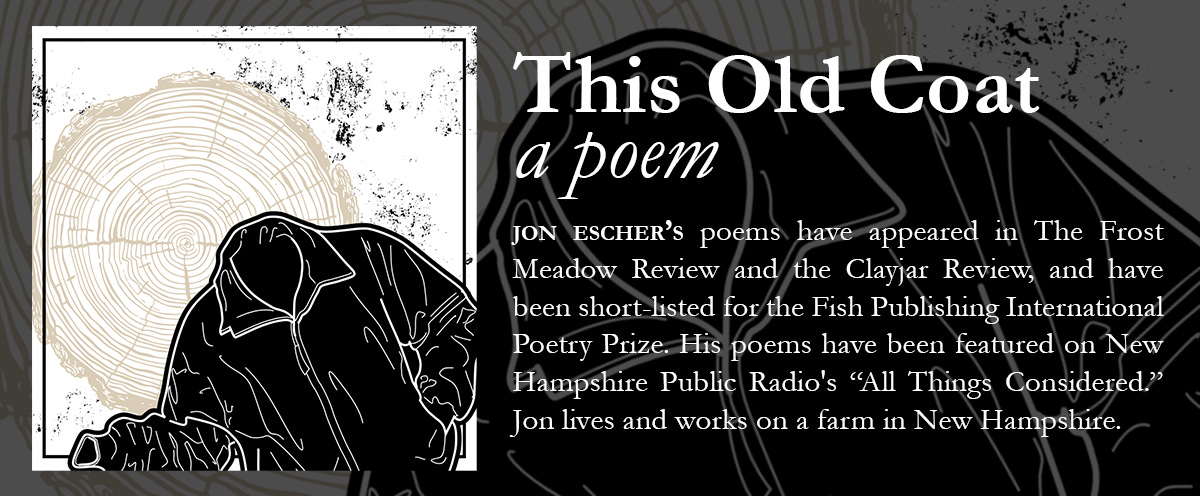
JON: Book of Job 8:8: “Please inquire of past generations. And consider the things searched out by their fathers.”
What biblical character do you relate to way more than you probably should?
JON: The Apostle Thomas.
Find more of Jon @hawkridepoetry on Instagram
What inspired the work?
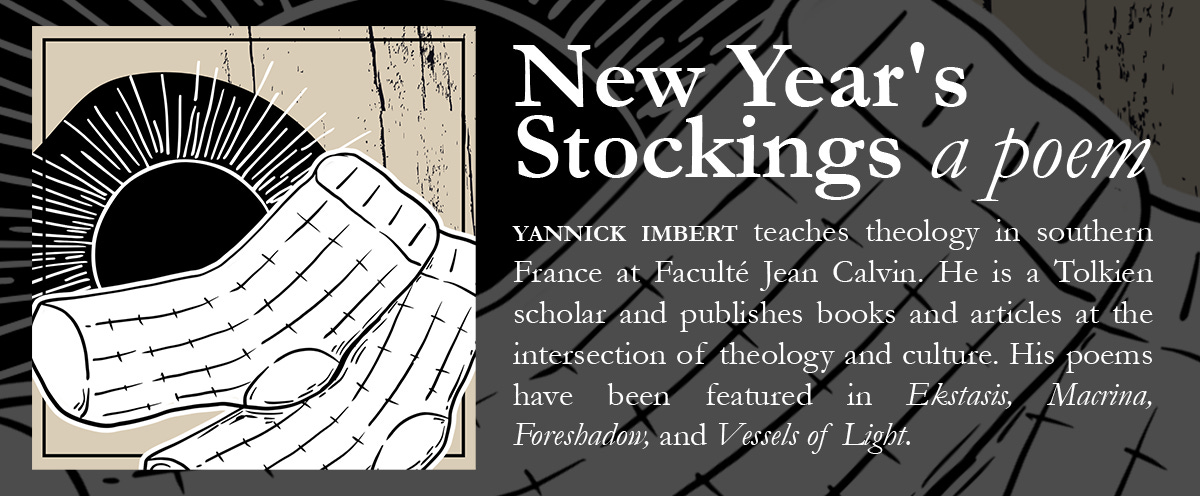
YANNICK: This poem has been long coming. It should have been a “rentrée” piece: rentrée is French for the beginning of the school year. Coming back from the seminary’s library where she worked she looked at the chimney with her beautiful bright eyes and asked me where her “stockings” were. I was lost. Stockings are for Christmas. That's when they’re due! Not before. I thought about it. Yes, they are due for Christmas—so to speak. But if we're only giving was is due, what does it say about us? About what we value? It took a few months, but I gave my wife “not-Christmas-stockings”... it just took a few months. It was a good reminder that we live not only by what we think is due, or normal. And that is grace! Grace given, and divine grace received.
What biblical character do you relate to way more than you probably should?
YANNICK: Peter, because I often act faster than I think. I should often slow down and ponder, contemplate, instead or rushing forward!
Find more of Yannick on Facebook @YannickImbert
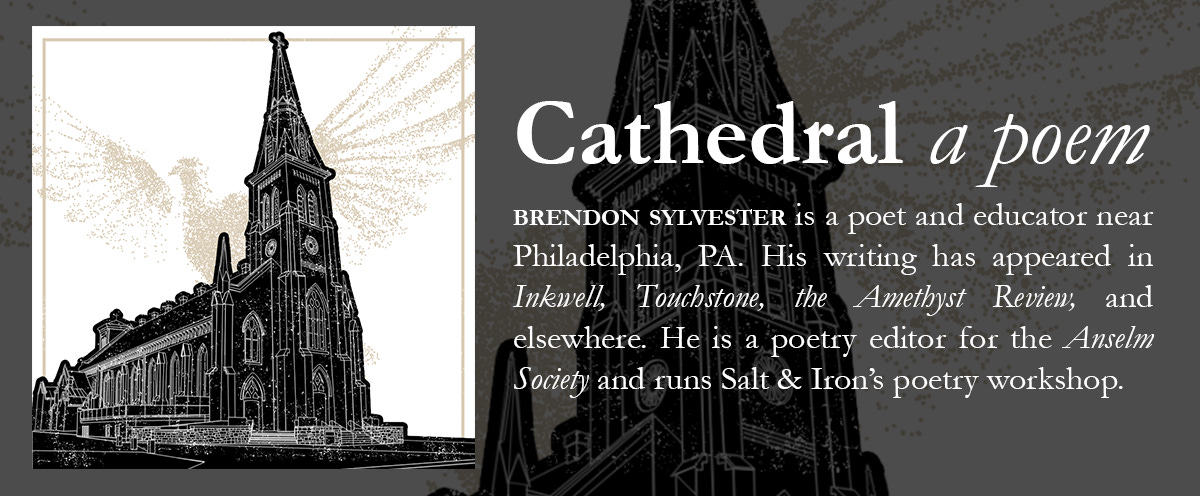
Find more of Brendon at Mount Acidale
Paradoxa
Friends, there has been a slight delay to Paradoxa’s release date. You can find the second update explaining why here:

Love this end-of-month newsletter update!