

endmatter: March
an end of the month collection
Hello, friends! Welcome to March’s endmatter.
The series’ inspiration lies at the end of a book, where the back matter (or end matter) exists. This overlooked place is, at the very least, where author acknowledgements and their bios are featured, but it is also often filled with a plethora of interesting information, delivered in appendices, glossaries, endnotes, indexes, bibliographies, and colophons.(Any other geeks out there who read with their finger lodged in the endnotes?)
Likewise, endmatter will function here as a month-end recap of the press’s endeavors, including announcements, updates, and most importantly, the month’s online publications. It will also feature recordings of published work in the author’s own voice, and, to emulate the goldmine of information of endnotes, it will also include some additional wisdom and insight from SFP’s published writers.
This Month’s Publications
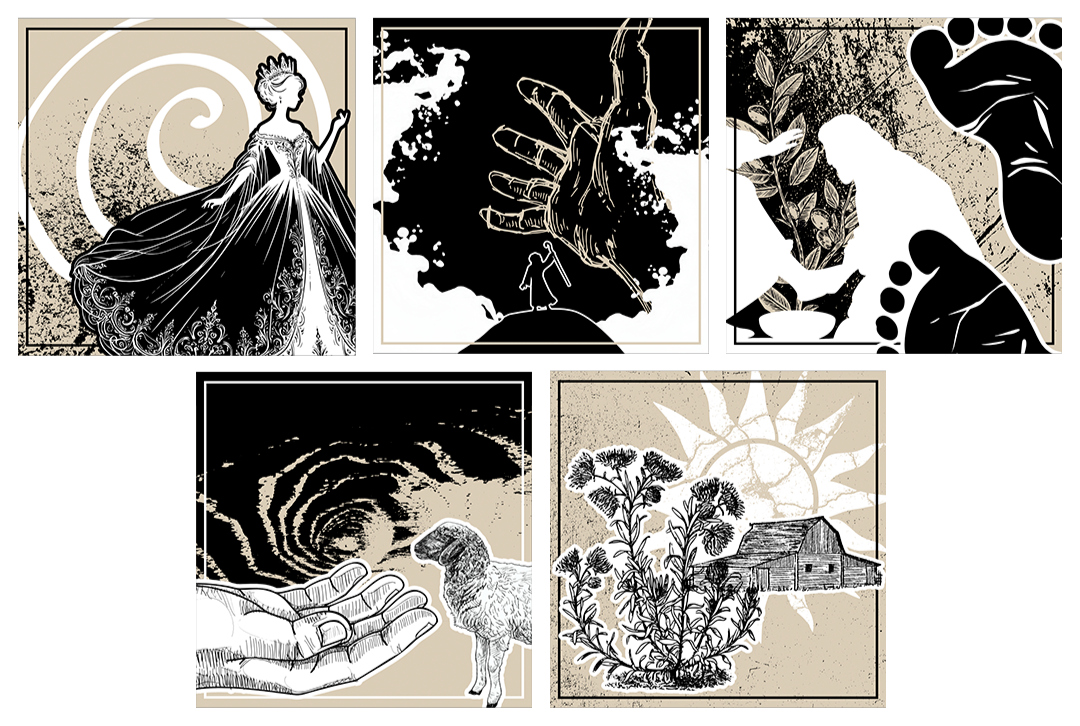
What inspired the work?
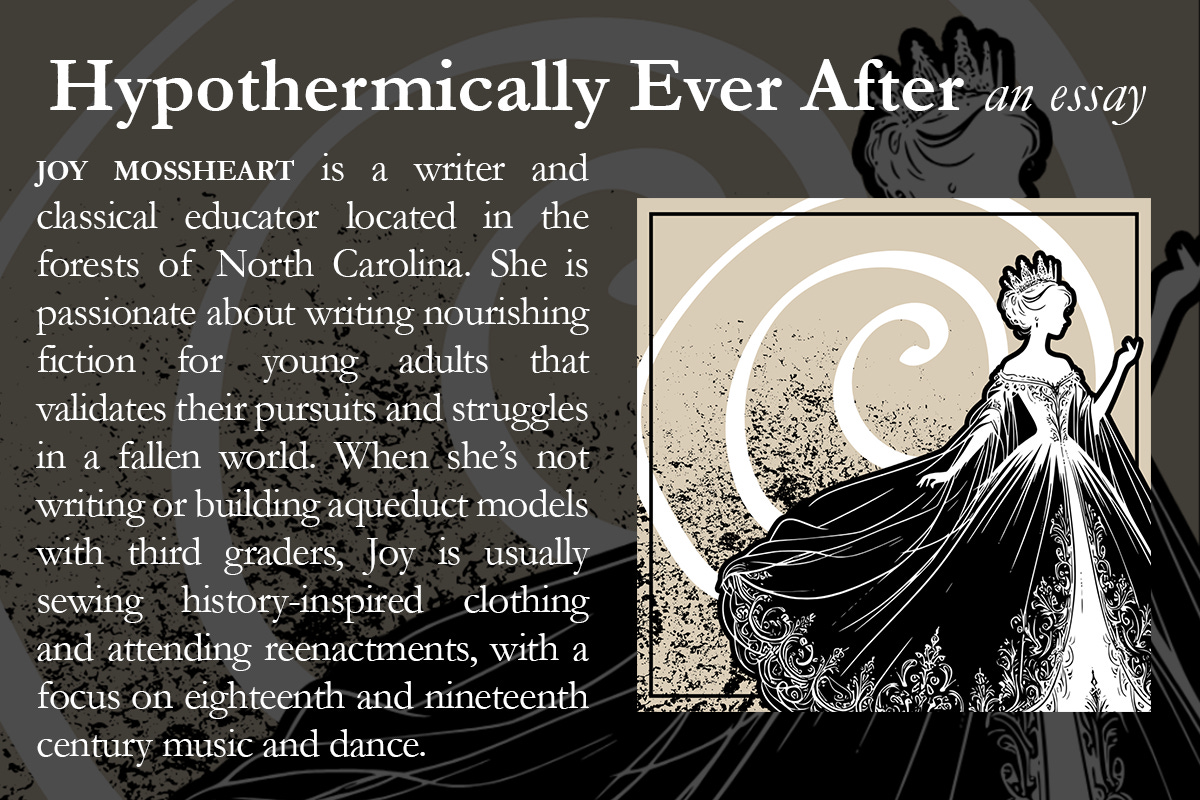
JOY: “Princessing” was an enormous part of my life and identity throughout high school and part of college. As far as teenage first jobs go, it taught me so much about stamina, improvising under pressure, and maintaining poise. Making my own costumes was also a wonderful testing ground for my later business sewing for historic reenactments and short films. But of course, princess work had a lot of unglamorous, comedically awkward moments. People often enjoy hearing these mishaps during icebreaker games at parties, but I wrote this piece because I wanted to talk about the more thought-provoking moments behind the tiara, and what happens when you don’t feel like a princess anymore.
If this piece were a Bible verse, which would it be? Why?
JOY: 1 Peter 2:9: “But you are a chosen race, a royal priesthood, a holy nation, a people for his own possession, that you may proclaim the excellencies of him who called you out of darkness into his marvelous light.” I love this verse because it expresses that as God’s children, we are his royal representatives on earth, with a responsibility to proclaim his glory wherever we go.
What does your creative process look like? How is God involved in that?
JOY: As a child, my favorite story was that of the little red hen: “I’ll do it myself!” I started writing primarily out of a desire to create what I wanted to read myself—or what I wish I could have read when I was younger. I most often end up writing fiction for Christian preteens and young adults, because I have found from personal experience that it is quite difficult to find nourishing, compelling stories written specifically for this audience that does not talk down to the reader or ridicule their convictions, while also validating their yearnings. However, whether fiction or non-fiction, I have to start every writing session by laying down all of my skills, ideas, and dreams at God's feet. As a character in the novel I am currently writing says, this is not always an easy thing to do, but it is simple—our life is the Lord’s tapestry, not our own.
If you could give one piece of writing advice, what would it be?
JOY: The world is obsessed with calling things “cringey,” and you can make literally any piece of writing sound cringey if you read it in a condescending enough voice. By what I call “mean middle school girl” logic, everything is cringey, and if you live as a slave to that, you will never have any joy in your work. Yes, you need to strive for excellence, but you need not strive to please the mean middle school girl-minded world at large. Write the thing that the Lord is leading you to write!
What biblical character do you relate to way more than you probably should?
JOY: Definitely Rhoda, the servant girl in Acts 12, who was so excited about Peter escaping prison that she forgot to open the door for him and made him stand at the gate knocking for who knows how long.
Find more of Joy @joymossheart on Instagram and on Etsy.
What inspired the work?
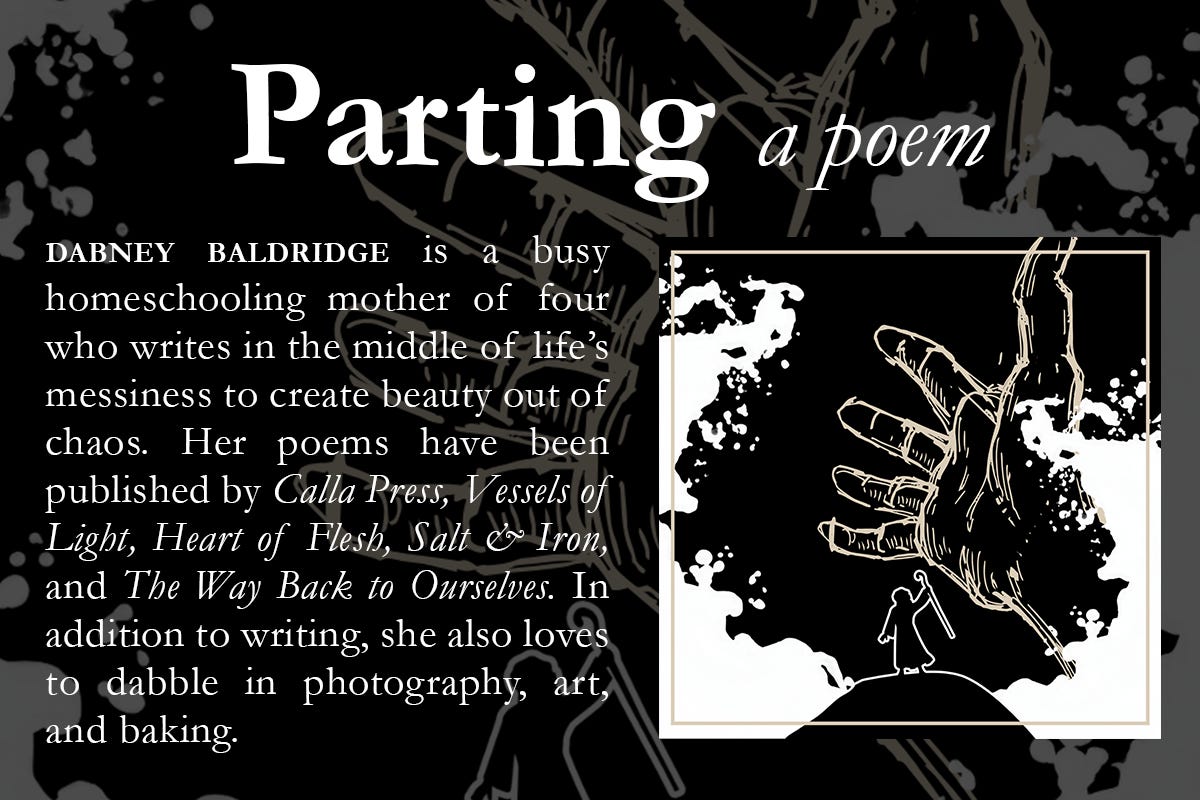
DABNEY: The story of the parting of the Red Sea in Exodus 14 inspired this poem, specifically verse 14, “The Lord will fight for you, and you have only to be silent.” I love playing with how the form a poem takes can be part of the story the words tell, so visually representing the parting of the Red Sea had been an idea in the back of my mind for some time, but I hadn’t figured out what the main idea of the poem would be until that verse jumped out at me. It brought to mind another of my favorite passages, Psalm 46: 10, “Be still and know that I am God.” In this fast paced world where everything can feel like an emergency, it is good to stop for a moment and remember that God calls us to be still and rely on him
What does your creative process look like? How is God involved in that?
DABNEY: My poems often start with a phrase that comes to me in the middle of my busy life which I then quickly jot down in my phone before I forget. I then spend time ruminating on that phrase and other ideas until I find a moment to sit down and structure them all. That time spent thinking and writing is my way of meditating deeply on God, his creation, his truths, and his word.
If you could give one piece of writing advice, what would it be?
DABNEY: Read your work out loud! Doing this always helps me as I edit, making it clearer where I should pare down and where I can play more with rhythm, rhyme, and alliteration (my personal favorite).
What biblical character do you relate to way more than you probably should?
DABNEY: a classic choice for a mother busy with much serving who needs to be reminded of what is truly important.
Read more of Dabney Baldridge
What inspired the work?
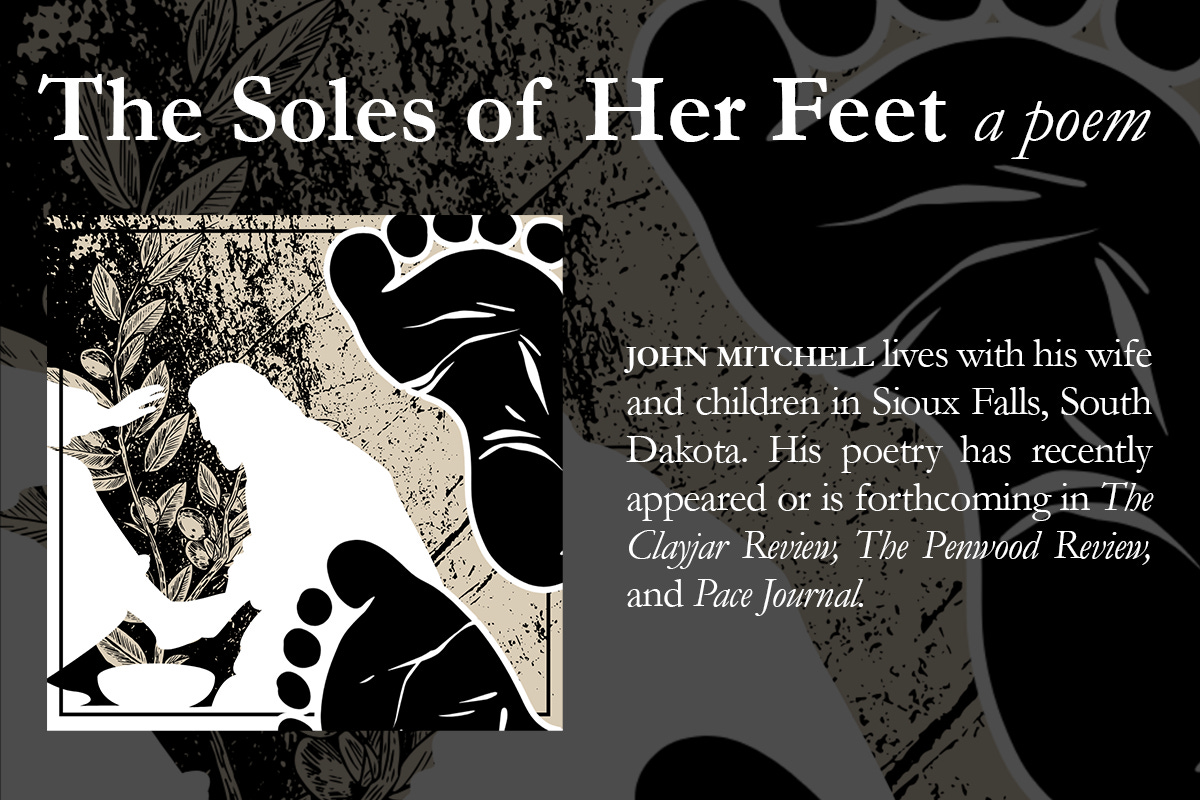
JOHN: My daughter will turn three years old soon. She’s vivacious, innocent, and has the rest of her life ahead of her. As her father, I am of course an active participant in her life. But there are lots of moments, often small, where I feel like an audience or a witness to her growth and maturation. It is in those little moments where I often reflect on how much she needs as she grows, and how little I can truly offer her. In this poem, I try to express the deep longing I feel for her to see with her own eyes that we are not our own but belong, body and soul, both in life and death, to God and to our Savior Jesus Christ.
If you could give one piece of writing advice, what would it be?
JOHN: Dedicate ample time to reading other poets. And read widely. I’ve found inspiration and encouragement from all sorts of authors; from the great poets of antiquity, to poet laureates (living and dead), and even poets in my own neighborhood. I can’t say that reading other talented writers has helped my work. But it has helped me better identify the quality pieces from the poems best left on the cutting room floor.
What inspired the work?
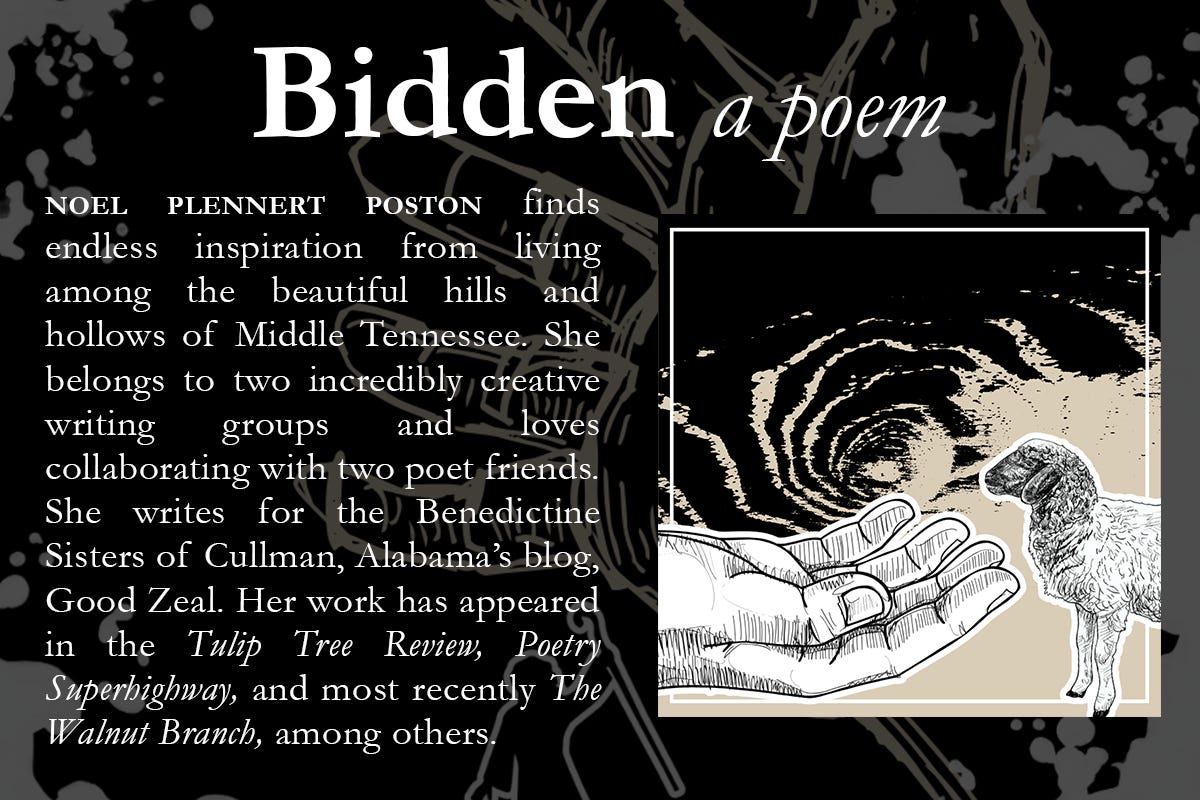
NOEL: My poem, Bidden, was initially inspired by a few verses, 46:13-15, about the prophet Samuel in the apocryphal book, Sirach, or Ecclesiasticus. This became an indirect reference from which I wrote a poem about Samuel that became a draft for other poems, Bidden included. Images of Jesus kept coming alongside Samuel and other OT prophets that helped me understand I wanted this poem to be about Jesus.
What does your creative process look like? How is God involved in that?
NOEL: I view writing, particularly writing verse, as a spiritual practice. Writing is a part of my prayer and meditation time. I find it easier to write than to pray the spoken word. Words flow much easier from my pen than my mouth.
If you could give one piece of writing advice, what would it be?
NOEL: I am fascinated by the ways a passage from Scripture or other sacred texts and poetry inspire one to draw deeply from an image or some other impression that generates a poem. Through a process of reflection and revision I try to uncover what I am really trying to say in a poem. This is where I find it invaluable to collaborate with other poets, both writing with and listening to each other’s work. Oftentimes it is hearing someone else read my work back to me and then being given the chance to talk about what image or character or concept inspired me to write that leads me to write a poem that I feel satisfied with.
If you had to pick a biblical story to describe your writing life in the last year, what would it be and why?
NOEL: The biblical story that best describes my writing life lately is the story of Elijah and the widow, from 1 Kings 17. I am the widow in the story, asked to produce a meal for an unexpected guest, from the little I have on hand, even as I am preparing this final meal for myself and my son. I ponder and wonder as my scant stores become more than enough, and my faith is revived and confirmed as I see and believe what I thought was being taken from me restored to life.
What inspired the work?
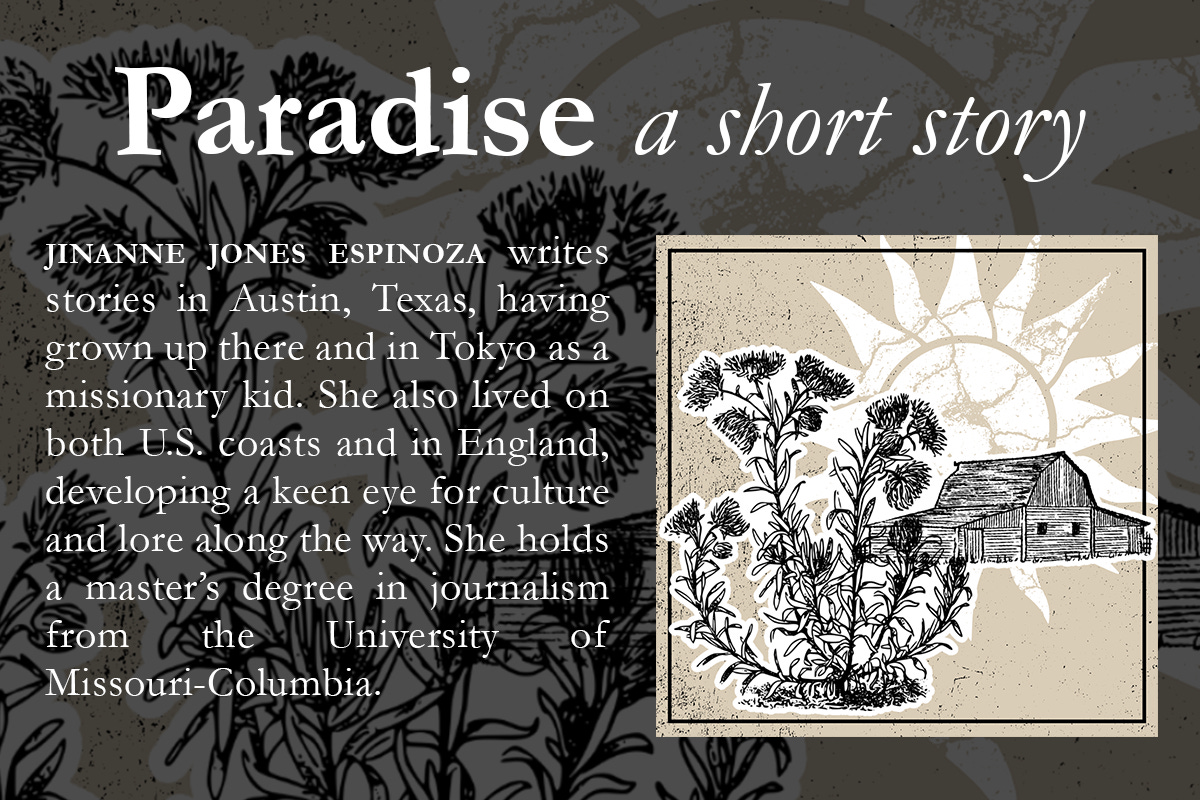
JINANNE: I wrote this story after attending a memorial service in rural West Texas. At the cemetery, I was struck by the view—empty, wind-battered plains under an enormous sweep of sky with clouds whipped across it. It felt hard, almost sterile to me, but my uncle, whom we were honoring, and my aunt had made their home in that environment. He called it “paradise,” they said. Those things stuck with me, as did the depth of the family’s love for him expressed at the tribute. This story came out of contemplating these impressions, and I wrote the first draft on the way home in the car.
What does your creative process look like? How is God involved in that?
JINANNE: My writing projects often start with a vague idea sparked by some Providential occurrence. Then I pray, knowing my time belongs to God. After some brainstorming and research, if a story starts to fall into place, I feel I’m on the right track. Still, every effort is a microcosm of our fallen-world journey: faith, obstacles, fits of fretting. So I pray for God to equip me each time I go to work at my laptop. And I always hope the resulting story points people to Christ.
What biblical character do you relate to way more than you probably should?
JINANNE: Hagar, Elijah, Jonah—the ones who are despairing, undone, stuck in a pit of their own making, a place I’ve been a few times. God gently draws near to each one, saying essentially, talk to Me. He listens patiently, invites raw honesty, then gives them just what they need to get back on the right path. We see God’s tender heart, and I’m reminded that we’re in such good hands.
Find more of Jinanne @jinanne.eliz on Instagram, and jinanne.jones on Facebook
Paradoxa
Friends, we’re almost there! Design is done, and we’re into the binding stage. Blog post to follow soon~
 | A guest post by
|
This is wonderful!